
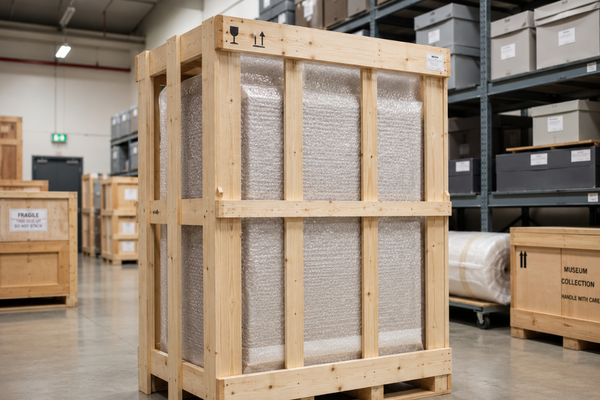
Moving artwork isn’t just about trucks and schedules; the packaging itself is often the unsung hero. Whether you’re shipping a contemporary sculpture, a centuries-old artefact, or a framed canvas for exhibition, the case is your artwork’s armour. And like armour, it needs to be tailored to the piece it protects.
What to Ask For When Ordering a Custom Art Transit Case
Custom Packaging Design & Engineering
,
Export Packaging & International Shipping
,
Protecting High-Value & Sensitive Equipment
Unlike off-the-shelf boxes, bespoke art cases are carefully engineered to shield fragile, irreplaceable items from knocks, vibrations, climate changes, and the general chaos of transport. Getting the details right from the start makes all the difference.
Start With the Artwork, Not the Box
The golden rule: the case exists for the artwork, not the other way around. Before anyone sketches dimensions, the focus should be on the piece itself.
- Dimensions and vulnerabilities: Where are the fragile points? A sculpture with delicate arms needs different support than a flat canvas.
- Weight and distribution: Is the piece heavy in one corner? That affects how the case balances.
- Materials and sensitivity: Does it react to moisture, heat, or movement?
A good packaging partner will ask these questions first. Understanding the artwork is the foundation of a safe design.
Inside Protection: Foam Is Key
The wooden shell is only half the story. The internal cushioning is what keeps the artwork safe when the case is jostled.
- Foam choice: Not all foams are equal. Museum-grade LD45 Plastazote is chemically inert, meaning it won’t damage sensitive materials.
- Shock absorption: For fragile or vibration-prone pieces, White Polylam offers extra protection.
- Custom inserts: CNC-cut foam can hug the artwork’s exact shape, preventing movement and protecting protrusions.
Think Beyond the Journey: The Environment Matters
Transport isn’t just about bumps; climate change can be just as dangerous.
- Moisture control: Vacuum-sealed foil bags with silica gel guard against humidity and condensation.
- International compliance: For overseas shipments, timber must meet ISPM 15 standards to avoid customs delays.
Handling and Logistics
Even the best case can fail if it’s awkward to handle.
- Loading methods: Will it be lifted by hand, forklift, or crane? Reinforced lifting points are essential.
- Clear markings: Labels and instructions reduce risk during transit.
- Ease of re-packing: Touring exhibitions need cases that can be safely re-packed by different teams.
Touring and International Shipments
For pieces that travel often or cross borders, cases must be built for endurance.
- Reusability: Touring cases should be designed for repeated use, not just one trip.
- Customs inspections: Expect multiple handling stages that your case must withstand.
Collaboration Is Everything
The best results come from working closely with your packaging supplier. Share as much detail as possible about the artwork, its vulnerabilities, and its journey. The more they know, the better they can protect it.
A successful art transit case isn’t just wood and foam, it’s the product of careful planning, collaboration, and respect for the artwork. By starting with good information, you give your piece the best chance of arriving safely, wherever it’s headed.
Follow Us on LinkedIn*
Stay updated with the latest news, insights, and project highlights by following Trafalgar Cases on LinkedIn.
