
Exporting medical or scientific equipment isn’t like shipping standard industrial goods. These aren’t just boxes of parts; they’re high-value, precision-built devices that hospitals, labs, and patients depend on. Diagnostic scanners, monitoring systems, and specialist instruments are incredibly sensitive to shock, vibration, moisture, and contamination. One careless bump or a little condensation can compromise their performance.
Anatomy of a Medical Export Case: Why Sensitive Equipment Needs Special Care
For manufacturers in the medical and pharmaceutical world, packaging isn’t just a box; it’s part of the product’s protection plan.
At Trafalgar Cases, we design bespoke wooden cases that make sure equipment arrives exactly as it left the factory: uncompromised, calibrated, and ready to save lives or advance research.
Starting with the Journey, Not the Box
Every medical export case begins with three questions:
- How fragile is the equipment, and what’s its shape?
- Will it travel by road, sea, or air?
- What environments will it face along the way?
Sea freight means moisture and temperature swings. Air freight brings pressure changes and repeated handling. Road transport exposes equipment to constant vibration. Each risk needs a tailored solution, because “one-size-fits-all” packaging simply doesn’t cut it.
Protecting Against Shock and Vibration
Medical devices often contain delicate electronics and finely tuned assemblies. Even a small impact can throw off calibration in ways that aren’t visible but can affect performance. That’s why our cases are built to absorb the stress.
We use:
- Cushioning systems and shock-absorbing mounts
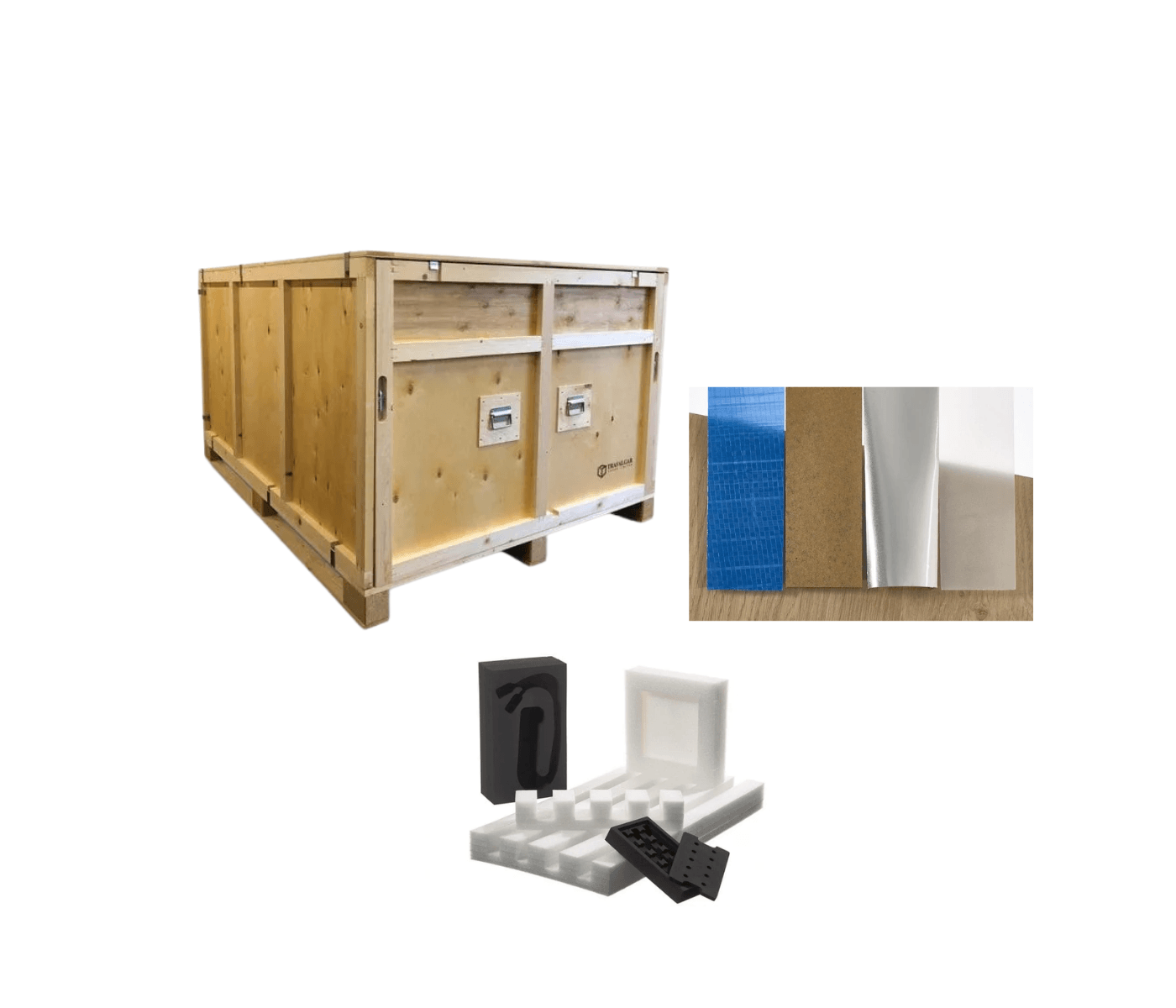
- White polylam, felt-lined battens and custom foam inserts shaped to the equipment
- Reinforced bases and load-bearing frames for heavy units
This way, forklifts, pallet trucks, and handlers can do their job without putting the equipment at risk.
Guarding Against Moisture and Climate
Condensation is a silent enemy. As containers move between climates, moisture builds up inside packaging, corroding sensitive components. To fight this, our cases can include:
- Bitumen paper, polythene or blue woven plastic lining
- Customised foil bags
Together, these create a controlled micro-environment inside the case. And when required, we build your case to ISPM 15 standards, ensuring timber packaging meets international regulations.
Keeping It Clean and Secure
Medical and pharmaceutical equipment must stay contamination-free. That means no abrasion, no loose particles, and no shifting during transit.
- Precision-fitted compartments, protective linings, and secure anchoring points keep everything in place.
- Additionally, we can use LD45 Plastazote foam, which is 100% chemically inert. This ensures a very low risk of chemicals contaminating the goods, providing an extra safeguard for sensitive medical and pharmaceutical items.
- For high-value devices, tamper-evident closures can add another layer of security.
Designed Around the Equipment
Unlike generic crates, our bespoke wooden cases are built around exact dimensions, weight distribution, and lifting points. This prevents:
- Over-packaging (extra weight and cost)
- Under-protection (higher risk of damage)
- Inefficient loading within containers
The result? Better protection, smoother logistics, and controlled costs.
Why It Matters
For medical manufacturers, damaged shipments aren’t just about replacement costs. It can mean:
- Installation delays
- Failed commissioning
- Recalibration headaches
- Reputational risk
- Disruption in hospitals or labs
That’s why a well-engineered timber export case isn’t just packaging, it’s part of the quality assurance process. At Trafalgar Cases, we don’t just build boxes. We design solutions that consider the equipment, the journey, and the environment it will serve, because when the contents are life-saving or research-critical, the case matters as much as what’s inside.
Follow Us on LinkedIn*
Stay updated with the latest news, insights, and project highlights by following Trafalgar Cases on LinkedIn.
