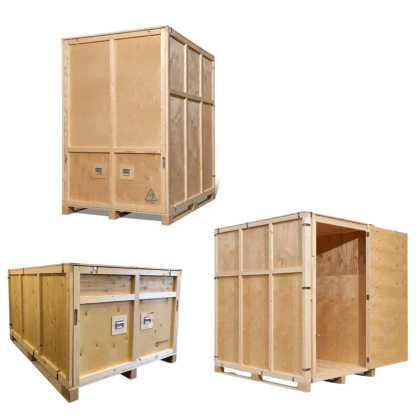
In the removals and storage industry, packaging isn’t just something you use once and then throw away. These containers are constantly put to the test, as they are lifted, stacked, moved from place to place, emptied and refilled, then sent out again for another round. Over the years, they endure a lot of use. That’s why lasting strength isn’t just a nice-to-have but an essential.
High-quality removal and storage containers are engineered very differently from disposable packaging. Their longevity comes down to construction methods, material selection, and how well they cope with real-world handling.
Built for Constant Handling
Cases that need to be used repeatedly must withstand ongoing mechanical stress. Forklifts, pallet trucks, and manual handling all place strain on bases, joints, and corners.
Durable cases start with robust timber frames designed to distribute load evenly. Reinforced bases, strengthened corner posts, and load-bearing panels prevent twisting and sagging over time. Unlike lightweight alternatives, these cases are built to be lifted again and again without weakening at stress points.
Why Timber Outperforms Other Materials
When comparing materials, plastic and metal are often considered alternatives to timber. However, in long-term, repeat-use environments, timber consistently proves to be the stronger and more practical option.
Timber’s natural advantage is its ability to absorb and distribute impact. Where plastic can crack and metal can permanently dent, high-quality timber flexes slightly under pressure and returns to form. This makes it particularly well-suited to busy warehouses and removals depots where knocks, vibration, and uneven loading are unavoidable.
Plastic cases also tend to become brittle over time, especially when exposed to temperature fluctuations. Metal cases can warp or corrode in damp storage conditions. By contrast, high-grade plywood and treated timber maintain consistent performance over years of use, even in challenging environments.
Material Quality Makes the Difference
Not all timber containers are created equal. Long-lasting containers use high-quality plywood for panels due to its dimensional stability, impact resistance, and resistance to delamination. Combined with correctly specified timber components, this creates a structure that remains square, strong, and reliable throughout its lifespan.
Strong Fixings and Proven Joinery
Durability often comes down to the details. Inferior fixings loosen over time, leading to rattling panels and weakened joints.
Repeat-use containers rely on industrial-grade fixings and reinforced joinery methods that can tolerate vibration, stacking pressure, and repeated movement without failure.
Designed for Stacking and Storage
Warehouse containers are rarely stored individually. They are stacked, sometimes several units high, often for long periods.
When we design containers built to last, we make sure they’re strong enough to be stacked safely, one on top of the other. This isn’t just about making them tough; it’s about protecting what matters inside.
Repairable by Design
One of timber’s greatest strengths is that it is repairable. Individual panels, bases, or fixings can be replaced without scrapping the entire container, which extends its lifespan, reducing waste and lowering long-term costs.
At Trafalgar Cases, we put real care and expertise into every removal and storage container we make, building them to go the distance from the very start. We know that when your containers stands the test of time, it does more than just safeguard your goods. It helps your business run smoothly, keeps costs in check, and upholds the trust your customers place in you.
Follow Us on LinkedIn*
Stay updated with the latest news, insights, and project highlights by following Trafalgar Cases on LinkedIn.