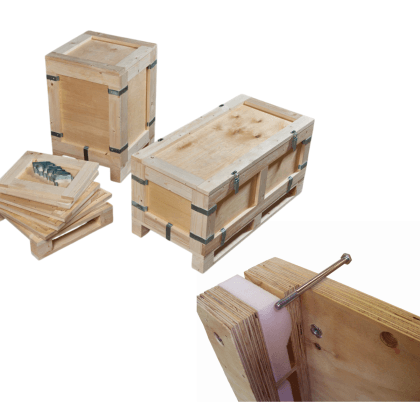
When you’re packing and transporting valuable goods, whether it’s medical equipment, aerospace parts, or even household items the packaging you choose can make all the difference. It’s not just about cost, but about making sure your products arrive safely, intact, and ready to use. Timber, plastic, and composite packaging are three of the most common options, each with their own strengths depending on the job.
Timber Packaging: Strong, Reliable, and Adaptable
Timber has stood the test of time in export packaging, because it’s tough. It can handle heavy loads, long journeys, and the knocks and bumps that come with transport. Timber cases are built to withstand stacking, vibration, and changing weather conditions.
But strength isn’t its only advantage. Timber is highly adaptable. You can add foam inserts, dividers, or battens to secure fragile or oddly shaped items. This makes it especially useful for industries where precision and protection are non-negotiable.
Another plus is that treated timber packaging meets international shipping standards like ISPM-15, so it’s ready for global export. And if a case gets damaged, it can often be repaired, thus extending its life and saving costs in the long run.
Plastic Packaging: Lightweight and Hygienic
Plastic packaging is often chosen for its light weight and consistency. They’re also resistant to moisture and certain chemicals, which is a big win in environments where hygiene is critical like the food industry.
Cleaning plastic is straightforward, which adds to its appeal. However, it’s not always the best choice for heavy-duty shipping. Plastic doesn’t have the same load-bearing strength as timber, and under repeated handling or stacking, it can lose its rigidity. In comparison, timber maintains its structural integrity under heavier loads and repeated handling, making it a more reliable choice for demanding transport conditions.
Composite Packaging: The Middle Ground
Composite packaging blends materials such as wood with plastics or resins, to create a hybrid solution. The idea is to balance strength, durability, and weight.
Composites also tend to resist environmental factors pretty well. That said, they’re less flexible than timber when it comes to customisation. If you need bespoke fittings for complex or fragile items, timber usually wins out. In most heavy-duty packaging applications, timber also still delivers greater overall strength and robustness, particularly under load and repeated handling.
Making the Right Choice
So, which material should you go for? It depends on what you’re shipping and where it’s going. Consider the weight, fragility, transport conditions, and compliance requirements. For a high-performance packaging option that requires assistance with heavy, high-value, or irregularly-shaped items, timber is often the safest bet.
Follow Us on LinkedIn*
Stay updated with the latest news, insights, and project highlights by following Trafalgar Cases on LinkedIn.